The photographer Michael Kenna and the writer Pico Iyer didn’t meet until they were in their sixties, but they had long been following similar paths. Both were born in England, and studied near Oxford in the 1970s before moving to the west coast of the United States. When they did bump into each other, their shared love of Japan, interest in Buddhism and experiences of wide-ranging travel served to deepen their connection. Now they’re collaborating on paper, in Same Sun Same Moon (Prestel, £35, April 14), “tracing the parallels of two lives lived in motion”.
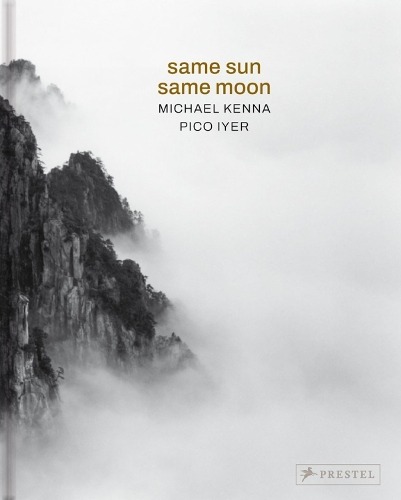
The book features more than 60 of Kenna’s black-and-white images, each accompanied by narratives from Iyer and notes from the photographer himself. “Kenna’s work, minimalist and often utilising long exposure, captures fleeting moments of calm and clarity across 50 years and five continents: a fog-bound canal in Venice, a deserted jetty in Mallorca, a line of trees dissolving into snow in Hokkaido. In prose that mirrors the restraint and depth of the photographs, Iyer writes about travel, childhood, coincidence, and the invisible threads that connect us. Together, their visions invite you to see the world — and your inner landscape— with fresh eyes.”
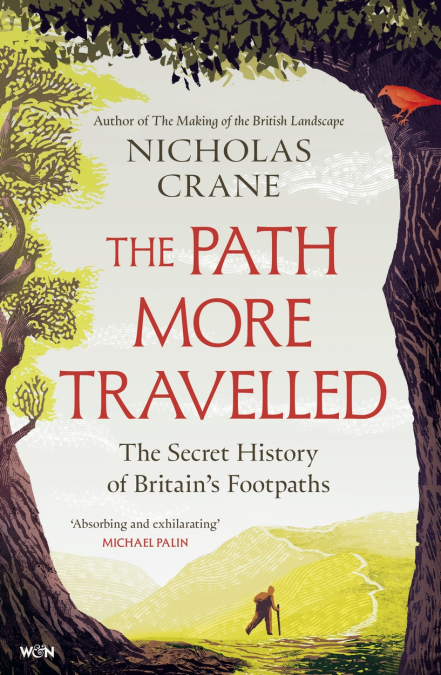
Nicholas Crane walked across the mountains of Europe for Clear Waters Rising and the length of England for Two Degrees West. For his latest book, The Path More Travelled (Weidenfeld & Nicolson, £25, April 23), the author, geographer and TV presenter explores “the secret history” of Britain’s footpaths, from routes walked by European migrants 12,000 years ago to pilgrim ways and coffin roads, turnpikes, towpaths and city pavements. “Along the way, Crane takes the reader on some of his most memorable walks: along Hadrian’s Wall, into the icy Cairngorms and to the banks of the Severn, where he discovers footprints from over 7,000 years ago. The Path More Travelled is a passionate ode to walking – and a call to rediscover and protect the lifeblood of our landscapes.”
Crane will be among writers contributing to an event in London on April 23 organised by the spoken-word forum 5 x 15. Also on the bill is Sara Wheeler, talking about her authorised biography of Jan Morris.

Raoul de Jong grew up in the Netherlands, “a brown dot in a white world”, and didn’t meet his father, who was from Surinam, until he was 28. When his father told him of a forefather who had been an enslaved African medicine man, capable of transforming himself into a tigri — a jaguar — de Jong became curious, as he puts it, “about everything I didn’t know”. In Jaguarman (HopeRoad, £14.99, May 7), a memoir that has been internationally acclaimed and is now being published for the first time in English (translated from Dutch by John Eyck), he explores the land of his father, the magic and history of his ancestors and “the dark shadow of colonial oppression”. De Jong, who has published eight books and written columns for numerous newspapers, says Jaguarman is “an ode to people who had all their freedom taken away… and who, thus, could do nothing else than think about what freedom truly means, and how to achieve that”.
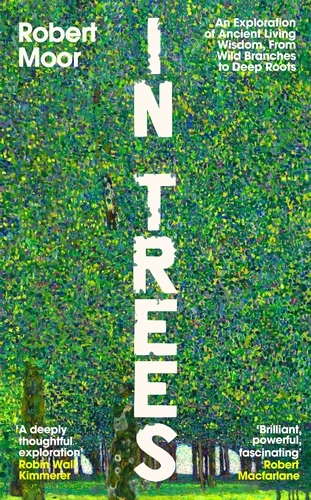
For his debut, On Trails (one of my books of the year for 2016), which was a prize-winning bestseller, Robert Moor hiked everywhere from Canada to Morocco, considering the trail as everything from a means of recreation to a metaphor for life. For his next book, In Trees (Viking, £20, June 25), he makes “a wondrous new journey through the wilds of nature and the gnarls of history, exploring how trees— from the mightiest sequoia to the tiniest bonsai — can teach us to grow wise”.
That decade-long journey, which began when he climbed a tree near his home, takes him to the top of a giant sequoia while filming a documentary with David Attenborough; through swamps in Papua to reach a treehouse-dwelling tribe of hunter-gatherers; and to a remote research camp in Tanzania, where he spends a night in a chimpanzee nest. Then he joins a clan of climate activists risking everything to halt construction of an oil pipeline and save an ancient forest.
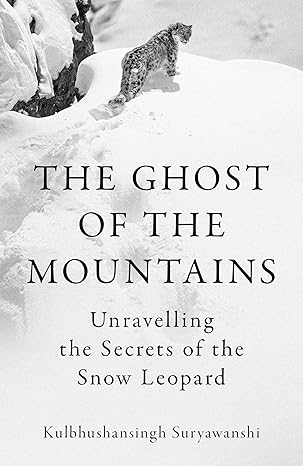
It wasn’t until 1970 that a snow leopard was photographed in the wild — by the American zoologist George Schaller, who three years later accompanied the writer Peter Matthiessen as he set off on his quest to see the world’s most elusive big cat. By 2018, 40 years on from the publication of Matthiessen’s The Snow Leopard, Schaller reckoned the animal had grown only slightly less mysterious.
Kulbhushansingh Suryawanshi — or Kullu, as he is better known — shares that view. He is an Indian scientist and conservationist who has spent 20 years studying the snow leopard. After publishing nearly 100 research papers, he says, he feels that “the people who really love this cat, and care about its conservation, do not know much about it”. So in The Ghost of the Mountains (Granta, £20, August 13), he takes us deep into the remote Himalayan landscapes of northern India to share what he has learned. The book, his publisher says, “combining expert authority, ground-breaking science, a journey of discovery and storytelling of the highest order, is a unique opportunity to see the world through the eyes of the snow leopard”.
Leave a Reply