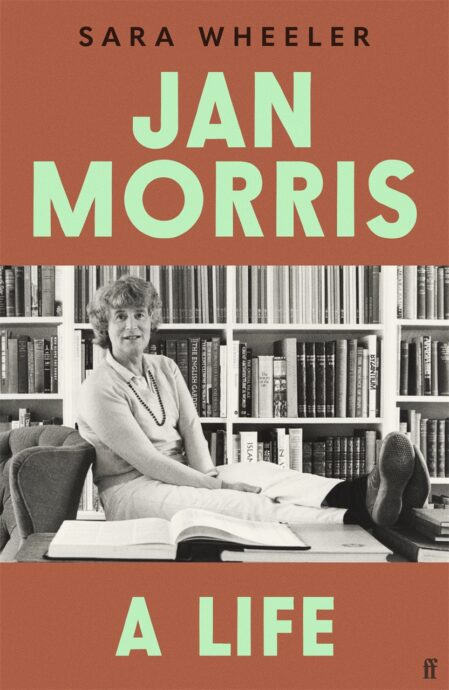
Jan Morris: A Life by Sara Wheeler (Faber, £25)
Wherever you go, Jan Morris (1926-2020), who earned a living “by perpetual wandering and writing”, was probably there before you. Venice — where “a multitude of tottering palaces, brooding and monstrous, presses towards its waterfront like so many invalid aristocrats jostling for fresh air”. Mount Everest — from where, in 1953, the then James Morris broke the news of Hillary and Tenzing’s ascent to the summit. Or Casablanca — where, in 1972, Morris, acting on “a lifelong conviction” that he should have been born female, had surgery to change sex, an experience related in what’s now seen as the first literary trans memoir, Conundrum (1974).
Like Morris, Sara Wheeler has spent much of her lifetime on the road. She has won acclaim for both travel writing (including Terra Incognita: Travels in Antarctica) and biographies (including Cherry: A Life of Apsley Cherry Garrard). She jumped at the chance to write the authorised biography of Morris, a writer who, she says, “lived an almost insanely interesting life”. Her book more than measures up.
Apart from the briefest introduction at a literary gathering, and a marginally longer chat on the phone, when Morris agreed to my request to nominate a favourite travel book in a series I was commissioning (she chose Laurence Sterne’s A Sentimental Journey through France and Italy), I encountered her only on the page, where she was, as Wheeler says, “one of the finest descriptive writers who ever lived”. So the story of her life off the road, and the contradictions at the centre of it, was eye-opening.
Here was a chronicler of the British Empire who considered herself a Welsh nationalist; a conjuror of place who bridled at the term “travel writer”; and a preacher of kindness who was often cruel to her family. After her daughter Suki had become a schoolteacher, Morris delivered at the dinner table, in front of Suki’s children, the unoriginal put-down that “Those who can, do, those who can’t, teach.” Throughout her life she maintained what Wheeler calls a “Stakhanovite work rate”, but that was made possible by the uncomplaining support of her wife, Elizabeth. After transitioning, Morris continued “in the robustly stereotypical male role she had always played, shunting all domestic labour onto Elizabeth”. There was, too, a searching, a longing, that the transition didn’t answer.
A lesser biographer might have drowned the reader in quotations from the 50-plus books her subject published between 1956 and 2020. Wheeler says crisply: “I have not mentioned every title Morris published in these pages, because… this is not a bibliography.” Instead, there are vivid little asides on what was happening beyond the walls while Morris was clacking on the typewriter. The publicity campaign in early 1974 for Conundrum “ran in parallel with the general election campaign, a weary Harold Wilson tramping rain-sodden streets as if he had already lost”. (Wilson, Wheeler makes clear later, “returned to Downing Street after all”.) Jan Morris: A Life is an enthralling account not only of that life but also of the times.
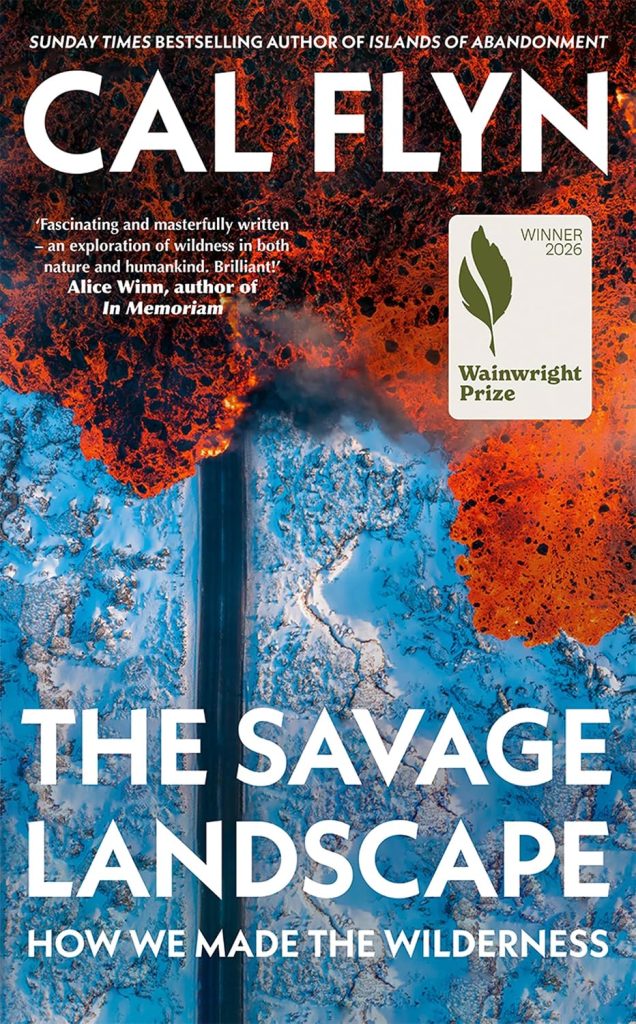
The Savage Landscape: How We Made the Wilderness by Cal Flyn (William Collins, £20)
In Islands of Abandonment (published in 2021, when wildlife began taking advantage of the Coronavirus close-down), Cal Flyn told a life-affirming story about “dead zones”. She travelled to abandoned places around the world — ghost towns, no-man’s lands and post-industrial hinterlands – and chronicled “what happens when nature is allowed to reclaim its place”. In The Savage Landscape, she takes us where, in theory, nature has been left undisturbed and unsullied: the wildernesses of the world.
From Mount Sinai, where the Desert Fathers sought communion with God, to Antarctica, where cruise-ship passengers make the last tick on their bucket list, she travels to some of the most remote outposts on the planet. At the same time she wrangles with the “ethical knots at the heart of conservation”, among them the eviction of native peoples — in the name of landscape “purity” — everywhere from Yellowstone National Park to the Impenetrable Forest in Uganda. The Savage Landscape is a book that makes you think anew about wilderness, and how we’ve seen it and shaped it, both in our heads and on the ground.
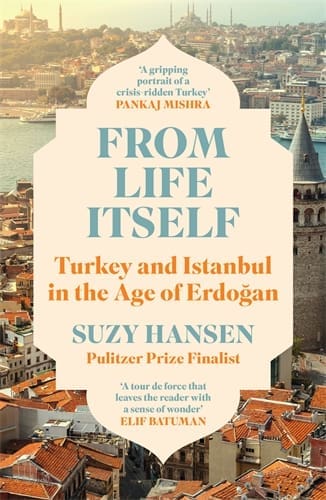
From Life Itself: Turkey and Istanbul in the Age of Erdoğan by Suzy Hansen (Profile Books, £12.99)
In her award-winning debut, Notes on a Foreign Country, the New Yorker Suzy Hansen told not only what she had learned of Muslim nations during her years in Istanbul but of what she had learned of “the intervening history of the United States”. In From Life Itself, she seeks the truth about Turkey under Erdoğan, a man who has drawn “ideology from the Ottomans, nationalism from the Turks, imperialism from the Americans”.
In the old Ottoman neighbourhood of Karagümrük, where the main street is just wide enough for one car, and narrow enough so that people can chat across it, she aims to see Istanbul and Turkey (and the world beyond) through the eyes of the residents, from a long-serving councilman to recently arrived Syrian refugees. What she hoped to capture, she says, “was how ordinary people experience authoritarianism in the 21st century — how our era feels“. She succeeds brilliantly.
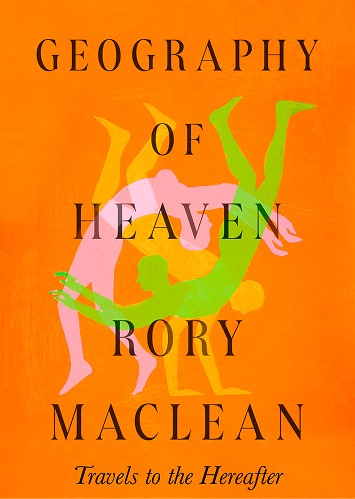
Geography of Heaven: Travels to the Hereafter by Rory MacLean (Abacus, £22)
Rory MacLean had crossed numerous borders on the ground for his previous travel books, from Stalin’s Nose to Magic Bus, but it was frontiers in the head he faced for his latest. His wife Katrin, to whom he was married for 32 years, had died of cancer at 55, and he couldn’t imagine going on without her. His answer: to go looking for her through an attempt to understand mankind’s ideas not of death but of the afterlife. A demanding quest for a man whose initial view even of therapy was that it was “too wacko for me”.
In Geography of Heaven, he visits “thin places” everywhere from India to Ireland, places where the mortal world is said to touch the divine. He spends a night on Jacob’s Rock in the hills north of Jerusalem, watches “gods” walk on fire in Kerala, sun-dances with the Lakota on the Great Plains, and cracks himself open with ayahuasca in Amazonia. His book is both a love story and an account of places where Elon Musk and his rockets will never be able to take you. “Katrin,” he writes, “opened a door for me. With her, I took a first step towards the beyond.” And this reader, a lifelong sceptic about heavenly things, felt compelled to follow him.
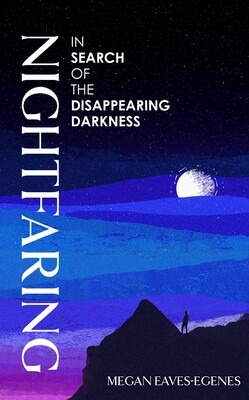
Nightfaring: In Search of the Disappearing Darkness by Megan Eaves-Egenes (Simon & Schuster, £18.99)
At a hard time in her life, Eaves-Egenes, a travel writer and “dark sky” advocate, embarks on a journey that takes her from her homeland in New Mexico to Mount Everest, from the North York Moors to the Argentinian jungle, exploring the many ways that we have depended on, feared and mythologised darkness, and asking whether — with over-lit cities bleaching our skies — we are losing our connection with all the good that comes with nightfall. Among the many things I learnt from her subtle, unshowy debut is that moths, which endlessly circle artificial lights until they die, have declined by 33 per cent in the past 50 years, threatening both plants and the food web, as they are responsible for pollinating a third of all crops, flowers and trees. Nightfaring is a book that helps you see more in the dark.
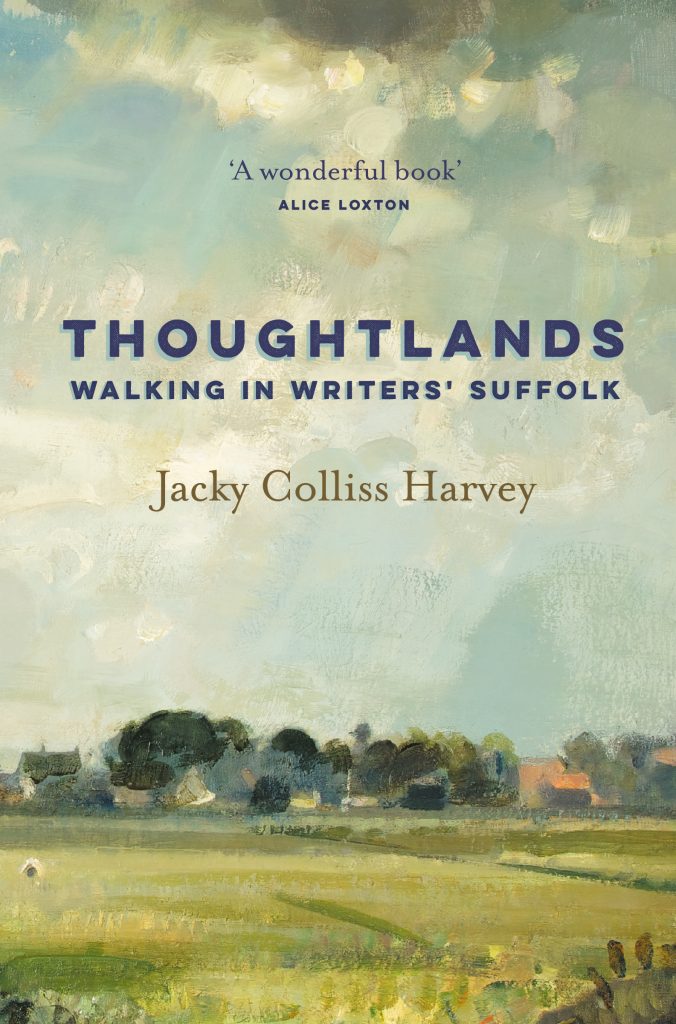
Thoughtlands: Walking in Writers’ Suffolk by Jacky Colliss Harvey (Haus Publishing, £14.99)
Having followed in the footsteps of Britain’s most famous urban diarist for Walking Pepys’s London, Jacky Colliss Harvey turns rambleuse, crossing her home county from west to east, “from cathedral city to open fields, from velvety farmlands muffled by leaves to deafening shingle and darkening sea”. Along the way, she reminds us how it’s been seen by others, from fellow natives such as Ronald Blythe and M R James to the poets George Crabbe and Edward FitzGerald and writers as disparate as Daniel Defoe, Patricia Highsmith, W G Sebald and Noreen Masud. Her book is a winning combination of writing, walking and thinking. On the path — where she’s led by her phone as she was born “with almost no sense of direction whatsoever” — you might think twice about following her; on the page, she’s wonderful company.
Leave a Reply