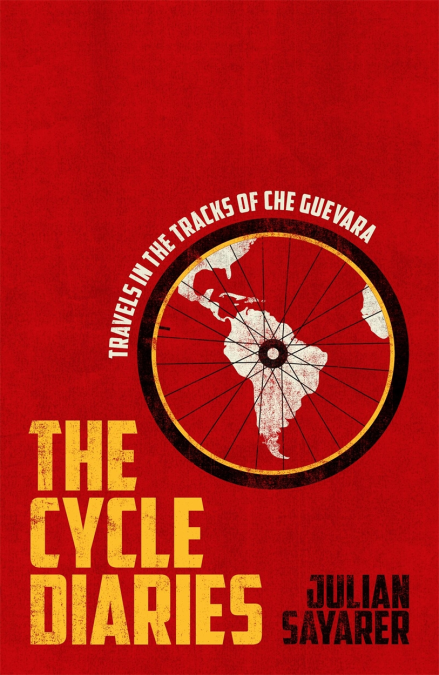
It was a portrait of the United States he made by hitchhiking from New York to San Francisco (Interstate) that won Julian Sayarer the Stanford Dolman prize for travel writing in 2017. His usual mode of transport, though, is the bicycle, which, he believes, allows him to “see better and so write better of everything… around it”. After pedalling round the world (Life Cycles), through Israel and Palestine (Fifty Miles Wide), across Spain and Portugal (Iberia) and through Türkiye, he’s looking over the handlebars again. In The Cycle Diaries (MacLehose Press, £25, July 16), he sets out to follow the 1952 journey of Ernesto “Che” Guevara through Latin America (as recounted by Guevara in The Motorcycle Diaries).
“Bringing the Diaries into a new century,” his publisher says, “Sayarer explores what has changed and what has stayed the same, taking in the history of the Cold War and the colonial conquest that came before it. His journey shows also that global politics can never truly be left behind, introducing him to socialist pensioners who have retired outside of the US and the reach of the FBI, and refugees of war trying to treat their trauma with ayahuasca. Meanwhile, meetings with Palestinian diplomats and a distant diaspora offer a reminder of events that are impossible to escape even half a world away.”
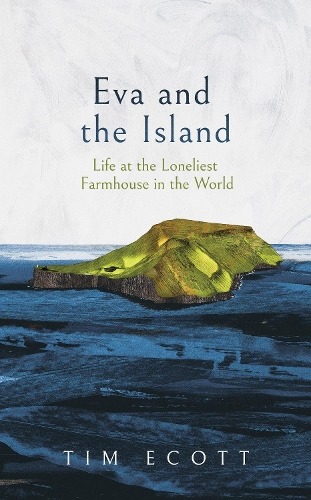
Tim Ecott, a former BBC World Service correspondent, says he has “long retreated to islands, and once ran away from England to live in the Seychelles so that I could scuba-dive obsessively in the Indian Ocean”. In earlier books, including Neutral Buoyancy, he explored his love of the Torrid Zone; more recently he’s been pulled northwards. In The Land of Maybe (2020), he set out to capture the essence of “slow life” on the 18 North Atlantic islands that make up the Faroes. In his next book, Eva and the Island (Icon, £15.99, August 13), he concentrates on a single outpost of the group: Stóra Dímun, which has been farmed by the same family for eight generations, and has only two permanent residents, Eva and her husband Jógvan Jón.
“Tracking the rhythm of the year and the challenges of life on this island,” his publisher says, “this book is a celebration of both the human spirit and our relationship with the natural environment. It is about sustainability, resilience and how to survive and adapt when the world is rushing headfirst into a digital future of artificial intelligence and anonymous food chains. Eva and the Island is a call to anyone who has ever dreamt of an island of one’s own.”

In the Walt Disney version of his story, John Chapman (1774-1845) — Johnny Appleseed — was a folk hero who walked across America, armed only with his Bible, to plant apple trees. He did cover a lot of ground, and do a lot of planting, between Pennsylvania and Illinois or Iowa, but his life has been much mythologised over the centuries. For a new book, American Rambler (published in the US last month by Knopf), Isaac Fitzgerald (author of the bestselling Dirtbag, Massachusetts) has walked, and sometimes driven, in Chapman’s wake, in an attempt, he says, to separate fact from fiction. An adapted extract from the book is the current “Big Feature” in Mother Jones magazine.
Leave a Reply