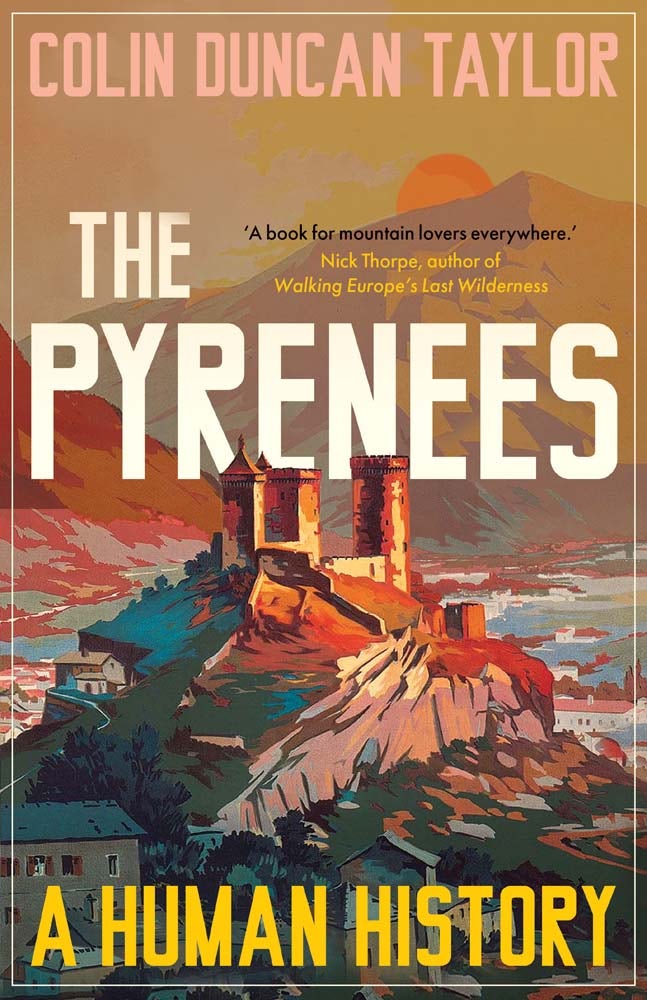
The mountain range that dominates the landscape between France and Spain, long thought of as an impassable wilderness, has been inhabited and shaped by humans for centuries. In The Pyrenees: A Human History (Yale University Press, £25, August 25), Colin Duncan Taylor, an English writer and journalist based in the south of France, takes us from the cave art of the first prehistoric inhabitants to today’s spa towns and ski resorts. As his publisher puts it, “Early pastoralists, Greek and Roman colonists, the Visigoths and the Moors all left their mark on the mountains, which have played an outsize role in European history — as a place to live or hide, attack or defend, exploit or enjoy. Taylor collects stories from both sides of the mountains and reveals how they have been made and remade throughout history by people from all levels of society.” An early reader, the BBC’s Central Europe correspondent, Nick Thorpe (author of Walking Europe’s Last Wilderness: A Journey through the Carpathian Mountains — also published by Yale), says Taylor’s book is “Immaculately researched, humorous, and beautifully written… A book for mountain-lovers everywhere.” There’s a brief extract in Geographical Magazine, and you can find notes on some of the oddities Taylor uncovers — including Europe’s main source of talcum powder — on his publisher’s website.
Leave a Reply